
Your Garage Door Shouldn't Sound Like That
You press the button, and instead of a smooth, quiet glide, your garage door groans, screeches, or rattles its way up the track. If you've started apologizing to your neighbors every time you leave for work in the morning, your garage door is trying to tell you something.
Noisy garage doors are one of the most common complaints we hear from homeowners in West Columbia. The good news is that most garage door noises point to specific, fixable problems. The bad news is that ignoring them usually makes things worse — and more expensive.
Let's break down the most common garage door noises, what causes them, and what you should do about each one.
Squealing or Screeching
A high-pitched squeal when your garage door moves is one of the most cringe-worthy sounds a homeowner can hear. It's also one of the easiest problems to address.
Common Causes
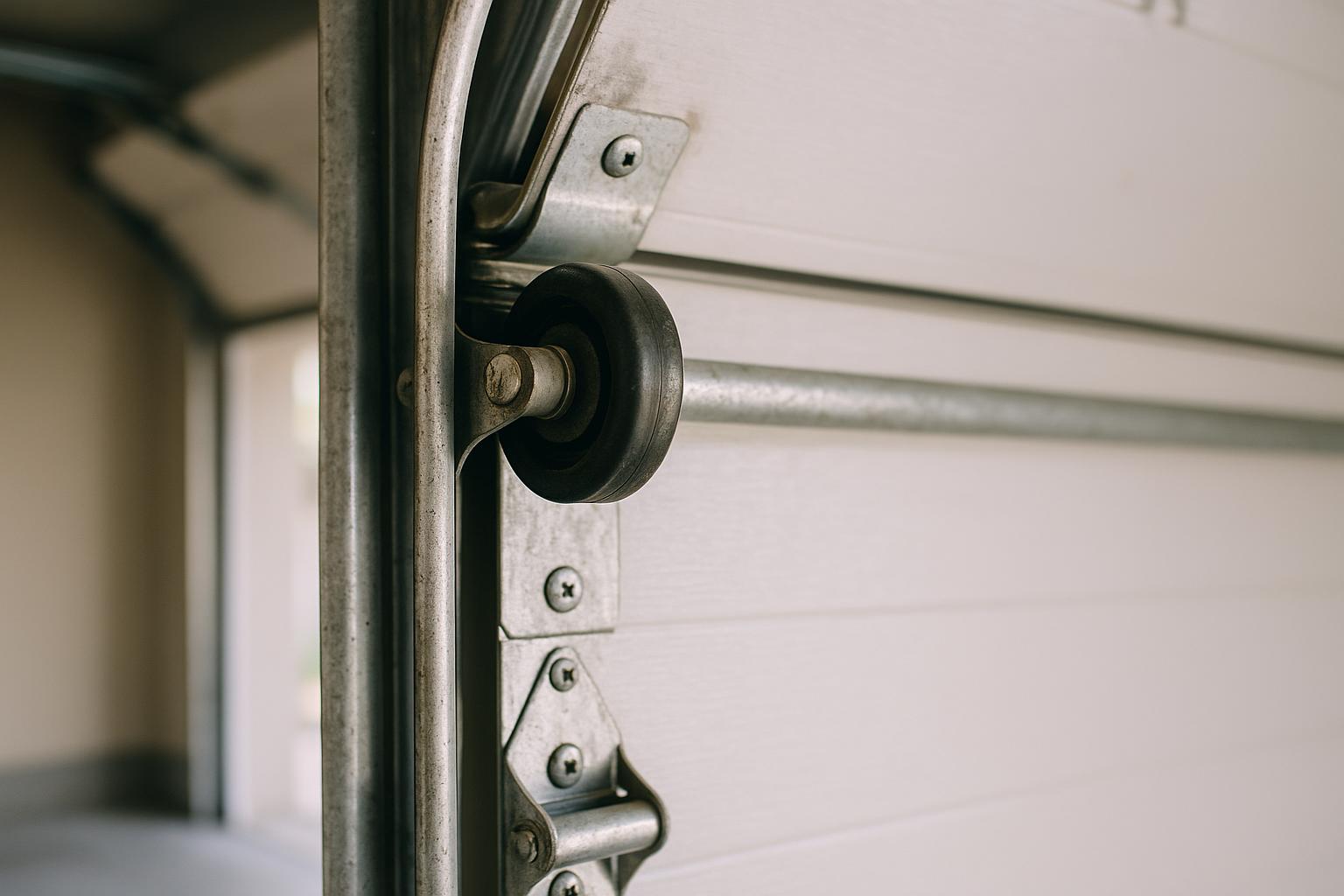
- Dry or worn rollers: Metal rollers running along dry tracks create friction that produces that unmistakable screech. Over time, rollers wear down and lose their smooth surface.
- Lack of lubrication: Your garage door has multiple moving parts — hinges, rollers, bearings, and springs — that all need periodic lubrication to operate quietly.
- Worn-out bearings: The bearings inside your rollers and at the ends of your torsion spring shaft can wear out, creating a squealing noise under load.
What to Do
Start by applying a garage door-specific lubricant (not WD-40, which is a solvent, not a lubricant) to the rollers, hinges, tracks, and spring coils. If the squealing continues after lubrication, your rollers may need to be replaced. Upgrading from metal rollers to nylon rollers is a popular choice among West Columbia homeowners because nylon operates significantly quieter.
Grinding or Scraping
A grinding noise usually means metal is rubbing against metal in a way it shouldn't be. This one deserves prompt attention because it often signals a misalignment issue that can cause further damage if left alone.
Common Causes
- Misaligned tracks: If your garage door tracks have shifted even slightly, the door can scrape against them as it moves up and down.
- Bent tracks: A track that's been dented or bent — whether from an accidental bump with a car or general wear — forces the rollers to grind their way through the damaged section.
- Worn gear in the opener: If the grinding sound is coming from your garage door opener unit rather than the door itself, the drive gear inside the opener may be stripped or wearing out.
What to Do
Visually inspect your tracks for obvious bends, gaps, or misalignment. You can sometimes spot daylight between the roller and the track where there shouldn't be any. Track adjustments and opener gear replacements are repairs best handled by a professional, since improper adjustments can cause the door to come off the track entirely.
Rattling or Vibrating
A rattling garage door sounds like loose change in a dryer. It's annoying, and it usually means something has come loose.
Common Causes
- Loose hardware: The nuts, bolts, and screws that hold your garage door system together naturally loosen over time due to the constant vibration of daily use.
- Loose chain or support rail: If you have a chain-drive opener, a loose chain will slap and rattle during operation. A loose support rail can amplify vibrations throughout the ceiling.
- Unsecured opener mounting: If the bracket that secures your opener to the ceiling has loosened, the entire unit can vibrate and rattle during operation.
What to Do
Grab a socket wrench and tighten all the visible nuts and bolts on your door's hinges, brackets, and track mounts. Check the chain tension on your opener if applicable — most owner's manuals specify the correct amount of sag. If the rattling is coming from the opener mounting, make sure the bracket is securely fastened to a solid support beam.
Banging or Popping
A loud bang or pop when your garage door operates is harder to ignore — and for good reason. These sounds often indicate a more serious issue.
Common Causes
- Torsion spring issues: A popping sound can occur when a torsion spring is under uneven tension or when a coil snaps. If a spring has already broken, you'll usually know because the door will be extremely heavy or won't open at all.
- Panels flexing: If your garage door panels are warped or not properly secured, they can pop or bang as they flex during movement.
- Opener force settings: If the force settings on your garage door opener are set too high, the opener can slam the door into the fully open or closed position, creating a jarring bang at the end of each cycle.
What to Do
If you suspect a spring issue, stop using the door and call a professional immediately. Torsion springs are under extreme tension and are dangerous to inspect or adjust without proper training and tools. For panel or force-setting issues, a technician can diagnose the problem quickly and make the necessary adjustments.
Humming Without Moving
If your garage door opener hums or buzzes when you press the button but the door doesn't move, the motor is getting power but can't do its job.
Common Causes
- Stripped opener gear: The motor is running, but the internal gear that transfers power to the drive mechanism has been stripped and can no longer engage.
- Locked or obstructed door: If the door is manually locked or something is blocking its path, the motor will strain against the resistance.
- Broken spring: Without functional springs to counterbalance the door's weight, the opener motor simply doesn't have enough power to lift the door on its own.
What to Do
First, check that the manual lock isn't engaged and that nothing is physically blocking the door. If the door is clear and still won't move, disconnect the opener using the emergency release cord and try lifting the door by hand. If it's extremely heavy, you likely have a broken spring. If it lifts easily but the opener still won't drive it, the opener itself needs repair or replacement.
When Noise Means It's Time to Call a Professional
Some garage door noises are simple fixes you can handle with a can of lubricant and a wrench. Others point to problems that require professional tools, replacement parts, and hands-on experience to resolve safely.
As a general rule, call a garage door technician when:
- The noise involves your springs or cables
- Your door is visibly off-track or crooked
- Lubrication and tightening hardware doesn't resolve the issue
- Your opener motor runs but the door won't move
- The noise is getting progressively louder or more frequent
Here in West Columbia, we see all of these issues regularly — especially during the humid summer months when metal components expand and moisture accelerates wear on moving parts. Getting ahead of a noisy garage door with a quick inspection or service call is always cheaper than waiting for a full breakdown.
Keep Your Garage Door Running Quietly
Your garage door is the largest moving part of your home, and it cycles up and down over a thousand times a year. A little noise is normal. A lot of noise is a warning. Pay attention to what your garage door is telling you, and you'll save yourself time, money, and the embarrassment of waking up the whole block every morning.
If your garage door has started making sounds you can't explain — or can't fix — West Columbia Garage Door is here to help. We diagnose and repair noisy garage doors across West Columbia, Cayce, Lexington, Irmo, and the surrounding areas. Give us a call and let's get your door running the way it should: smoothly and quietly.