
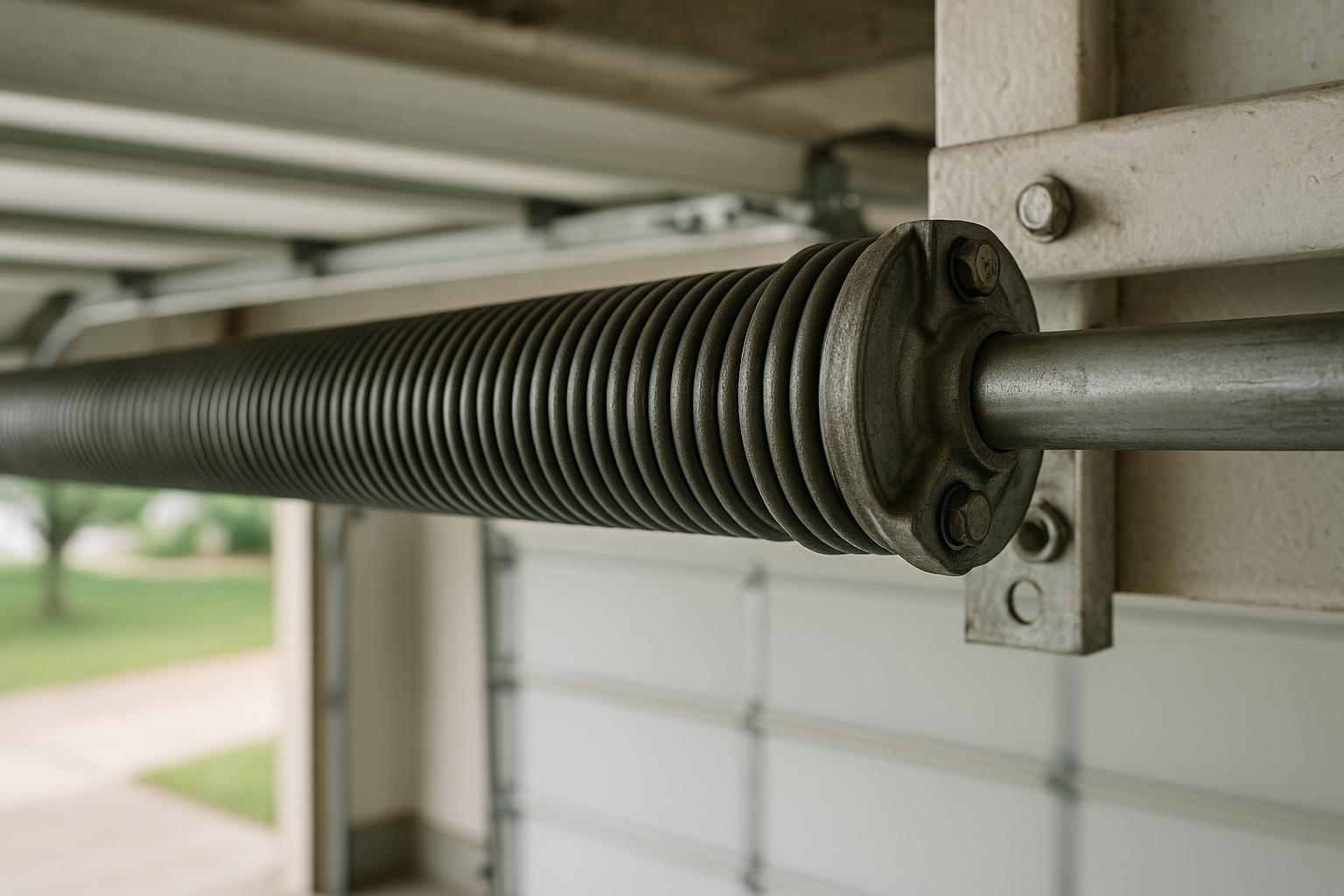
Your Garage Door Springs Are Under More Stress Than You Think
Every time your garage door opens and closes, the springs do the heavy lifting — literally. A standard two-car garage door can weigh 200 to 300 pounds, and the springs are responsible for counterbalancing all of that weight. Most torsion springs are rated for around 10,000 cycles, which means if you open and close your door four times a day, you're looking at roughly seven years of use before they reach the end of their lifespan.
The good news is that garage door springs almost never fail without giving you some warning signs first. If you know what to look for, you can schedule a spring replacement on your terms instead of dealing with an emergency when your car is trapped inside the garage. Here in West Columbia, we see spring failures spike during temperature swings — the cold mornings of winter and the sweltering heat of summer both put extra strain on aging springs.
7 Warning Signs Your Springs Are Failing
1. Your Door Feels Heavier Than Usual
Try this simple test: pull the emergency release cord to disconnect your garage door from the opener, then manually lift the door about halfway. Let go. A properly balanced door with healthy springs should stay in place or drift only slightly. If the door feels extremely heavy to lift or slams down the moment you release it, your springs are losing tension and nearing the end of their life.
2. The Door Opens Unevenly or Crooked
If your garage door tilts to one side as it opens, one of your extension springs may be weaker than the other, or one side of a torsion spring system may be failing. An uneven door puts stress on the tracks, rollers, and opener, which can lead to even more expensive repairs if you ignore it.
3. You Hear Loud Squeaking or Popping Sounds
Some noise during operation is normal, but new or worsening squeaking, grinding, or popping sounds can indicate that a spring is stretching unevenly or that the coils are starting to separate. A sudden loud bang from your garage — especially when no one is operating the door — is often the sound of a spring snapping. Many West Columbia homeowners have told us they thought something fell off a shelf or someone broke into their garage, only to discover a broken torsion spring above the door.
4. Visible Gaps in the Spring Coils
Take a look at the torsion spring mounted on the metal shaft above your garage door. On a healthy spring, the coils are tightly wound with no visible gaps. If you see a separation or gap in the coils — even a small one — the spring has either broken or is stretched beyond its functional limit. Do not attempt to touch or adjust the spring yourself. Torsion springs are under extreme tension and can cause serious injury.
5. Your Opener Struggles or Stops Mid-Cycle
When springs weaken, your garage door opener has to work much harder to lift the door. You might notice the motor straining, the door moving slower than usual, or the opener stopping partway through a cycle. Running your opener under this kind of load will burn out the motor prematurely, turning a spring replacement into a spring and opener replacement.
6. The Door Closes Too Fast
A garage door that drops quickly when closing is a safety hazard, especially if you have children or pets. This usually means the springs are no longer providing enough counterbalance to control the door's descent. If you notice your door closing faster than it used to, treat it as an urgent issue.
7. Rust or Corrosion on the Springs
Humidity is a fact of life in the Midlands of South Carolina. Over time, moisture in your garage can cause rust to form on the spring coils. Rust weakens the metal and increases friction, which shortens the spring's lifespan significantly. Regular lubrication can slow this process, but once corrosion is advanced, replacement is the safest option.
Can You Replace Garage Door Springs Yourself?
We strongly advise against DIY garage door spring replacement. Torsion springs store a tremendous amount of energy, and improper handling can result in serious injury or even death. Extension springs, while slightly less dangerous, can also cause harm if they snap during removal. Professional technicians have the tools, training, and experience to replace springs safely and ensure the door is properly balanced afterward.
Beyond safety, there's also the matter of getting the right spring. Springs come in different wire gauges, lengths, and inside diameters, and using the wrong specification will result in poor performance or premature failure. A qualified garage door technician will measure and match the correct spring for your specific door.
What to Expect During a Spring Replacement
When you call a professional for spring replacement, the process typically takes about an hour. Here's what's involved:
- Inspection: The technician will assess the overall condition of your door, including cables, drums, rollers, and tracks, since a broken spring can damage other components.
- Spring removal: The old spring is carefully unwound and removed using specialized tools.
- Installation: The new spring is installed, wound to the correct tension, and secured.
- Balancing and testing: The door is balanced, the safety features are tested, and the opener is adjusted if needed.
Most reputable companies — including ours here at West Columbia Garage Door — recommend replacing both springs at the same time, even if only one has failed. Since both springs are the same age and have endured the same number of cycles, the second one is likely close behind. Replacing both saves you from paying for a second service call in a few weeks or months.
How to Extend the Life of Your Garage Door Springs
While springs will eventually wear out no matter what, you can get more life out of them with a few simple habits:
- Lubricate the springs with a silicone-based garage door lubricant every three to four months. This reduces friction and helps prevent rust.
- Keep your door balanced. If you notice any signs of imbalance, call a technician to adjust the tension before it causes uneven wear.
- Minimize unnecessary cycles. Every open-and-close counts toward that 10,000-cycle rating. If you're using your garage door as your primary entry point, consider upgrading to high-cycle springs rated for 25,000 or even 50,000 cycles.
- Schedule annual maintenance. A professional tune-up catches small problems before they become big ones.
Don't Wait for a Complete Failure
A broken garage door spring is more than an inconvenience — it can leave your home unsecured, your car stuck inside, and your daily routine disrupted. If you've noticed any of the warning signs above, it's worth getting a professional opinion sooner rather than later.
West Columbia Garage Door provides fast, reliable spring replacement for homeowners across West Columbia, Cayce, Lexington, Columbia, Irmo, and Springdale. We carry a wide selection of springs on our service vehicles so most repairs can be completed in a single visit. Give us a call today to schedule an inspection and keep your garage door operating safely and smoothly.