
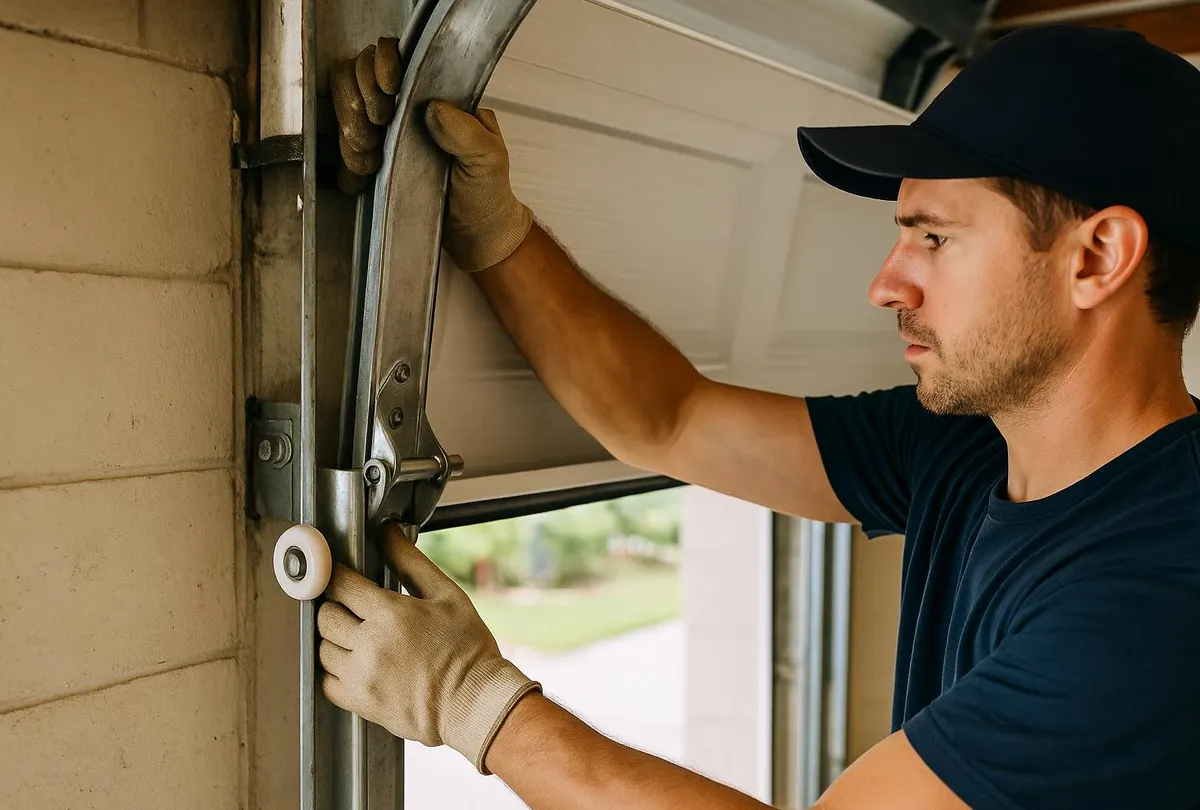
Spring Wear Rarely Announces Itself Loudly—Until It Does
The rule of thumb: if your garage door's sound, speed, or balance changes even slightly from one week to the next, a spring is wearing out. Garage door springs don't usually fail out of nowhere—they fatigue over hundreds or thousands of cycles, and that fatigue shows up in small ways before the big one.
The exceptions matter, though. Rust from humidity or a hard freeze-thaw cycle can weaken a spring faster than normal use would suggest, masking the usual wear timeline. And some torsion springs break clean and sudden with almost no warning sign at all, especially older galvanized springs that have been sitting through several seasons of heavy rain and pine-shaded moisture. So treat this checklist as a strong early-warning system, not a guarantee you'll catch every failure before it happens.
Walk-Around Checklist: Torsion Springs
Torsion springs sit on a metal bar directly above the closed door, usually in one or two tightly wound coils. Disconnect the opener and look before touching anything.
- Visible gap between coils. A healthy torsion spring sits coil-to-coil with no daylight showing through. A gap, even a small one, means the spring has lost tension and is stretching under load. This is one of the clearest signs of impending failure.
- Rust or pitting on the coils. Light surface rust is cosmetic, but pitting—small dark craters in the metal—weakens the wire itself. In this area, garages that sit downwind of pine trees or catch runoff during heavy rain tend to rust faster than you'd expect, especially on the underside of the coil where moisture collects.
- Color and texture change. A spring that looks dull, flaky, or discolored compared to a replacement or a less-used section of the bar is telling you the finish has broken down, which accelerates fatigue.
- Frayed or kinked lift cables near the drum. These work with the spring, and a cable starting to shred is often a sign the system is under more strain than it should be.
- Door balance test. With the opener disconnected, lift the door manually to about waist height and let go. It should stay roughly in place. If it drops on its own or shoots upward, the spring tension is off, and that's extra load the spring wasn't built to carry long-term.
Walk-Around Checklist: Extension Springs
Extension springs run along the horizontal tracks on either side of the door, stretching and contracting as the door moves.
- Missing or rusted safety cables. These thin cables should run through the center of each extension spring. If they're missing, frayed, or visibly rusted, the spring has lost a layer of protection and should be addressed immediately.
- Spring stretched longer than its resting coil length. Compare both springs side by side—mismatched length almost always means one is fatiguing faster than the other.
- Gaps forming between coils at rest. Same signal as with torsion springs: a spring that should sit tightly coiled but now shows separation is losing its ability to hold tension.
- Pulley wear or fraying where the cable runs. A groove worn into the pulley, or cable strands catching on it, adds friction that speeds up spring fatigue.
Behavior Checklist: What the Door Itself Tells You
- Opener strains or hesitates. If the motor sounds like it's working harder than it used to, especially on the way up, the springs may no longer be carrying their share of the door's weight.
- Door closes faster or slams at the bottom. This usually means a torsion spring has lost tension and can't control the descent the way it should.
- One side appears to lift before the other. Uneven lift is a classic sign of one spring wearing faster than its pair, even if both were installed at the same time.
- Loud bang or popping sound during operation. This can mean a spring has already partially failed, even if the door still opens.
Age and Cycle Count Matter Too
Most residential springs are rated for around 10,000 cycles, which works out to roughly 7–10 years of typical use—opening and closing the door once or twice a day. Homes with two vehicles using the garage daily, or a door that also gets used heavily during storm season when everyone's in and out ahead of hurricane remnants moving through, will burn through that cycle count faster. If your springs are approaching or past that age range and you're seeing even one item on this checklist, it's worth having them inspected rather than waiting for a clear failure.
When to Call West Columbia Garage Door
If you've spotted a coil gap, rust pitting, an unbalanced door, or a spring that's visibly stretched compared to its pair, that's the point to call rather than wait. We'll measure spring tension, check both springs together (replacing one and leaving a worn match is asking for a repeat visit), and run a full balance test as part of our Spring Replacement service. If the springs themselves look fine but you're not sure, our Garage Door Maintenance visits include a hands-on inspection of coils, cables, and pulleys so small wear gets caught before it becomes a dead-in-the-tracks door on a Saturday morning.
If your garage door in West Columbia, SC is showing any of these signs, give West Columbia Garage Door a call—we'll get a technician out, check the springs properly, and get your door back to a safe, balanced lift.